AI Photo Editor - AI Enhancer
- 4.3
- Rating
- 1.00M
- Installs
- Free
- Price
 Analysis by App-foxy
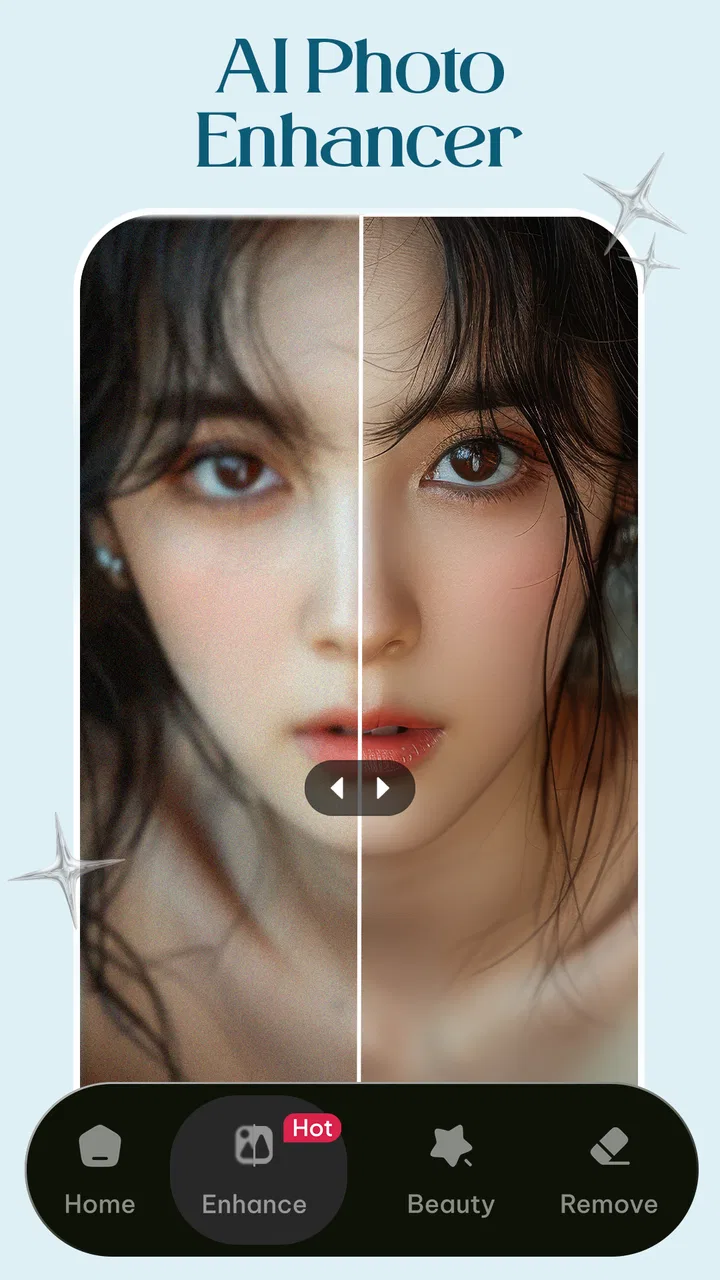
I spent time with AI Photo Editor - AI Enhancer as a practical photography tool rather than treating it like a one-tap magic solution. Its main appeal is straightforward: it helps remove unwanted backgrounds and improve the appearance of photos with artificial intelligence. That makes it relevant for product images, profile pictures, social posts, and quick personal edits where opening a full desktop editor would feel excessive.
What stood out to me is how focused the app feels. It is not trying to replace a complete photo studio with layers, advanced masking, or a long list of professional controls. Instead, it aims to shorten the distance between an ordinary image and something cleaner or more presentable. That simplicity is useful, but it also means the quality of the result depends heavily on the original photo and on how much control you expect after the automatic edit.
How the app fits into everyday photo editing
AI Photo Editor - AI Enhancer is a free photography app developed by Anderson Tony. It is available for users aged Everyone, and the app runs on Android devices using version 7.0 or later. The current release is version 14.0, so it is aimed at a broad range of Android phones rather than only recent hardware.
You May Also Like

 Blood Strike: 2.5 Anniversary
Blood Strike’s Loadouts Turn Every Drop Into a Tactical Gamble
A close look at Blood Strike’s custom loadouts: how fast access to signature weapons reshapes its battle royale rhythm, rewards preparation, and narrows the gap between fights.

 Pandora - Music & Podcasts
Pandora’s Music Is Easy to Start, but Harder to Recover
Pandora’s strength is its low-effort path from a seed to a station. Its weak spot is how much confidence it asks you to place in connection, setup, and quiet recovery.

 8 Ball Pool
 Is Built on Rivalries, Rematches, and Routine
A close look at the rivalries, rematches, shared routines, and unanswered safety questions that turn a quick pool match into a persistent mobile community.

 Samsung Music
’s Quiet Strength Is Playing What You Already Own
Its reach comes less from spectacle than from dependable access to a personal library. That simplicity is both the app’s strongest retention engine and its ceiling.

 AccuWeather: Weather Radar
AccuWeather Review: A Quick, Clear Forecast for Everyday Decisions
For everyday plans, the best forecast is the one you can understand quickly. AccuWeather makes rain timing, radar, and local conditions easy to act on, with a few trade-offs.

 Hill Climb Racing
Why Hill Climb Racing Still Turns Crashes Into One More Run
A tiny car, a bumpy hill and one more upgrade: Hill Climb Racing keeps resurfacing because its simple chaos makes every near-miss feel personal.
More From Our News Desk
View All News


The app has reached over one million installs and holds a 4.3 average from around one and a half thousand ratings. Those figures suggest that it has found a reasonably wide audience, although they do not tell me whether every image type produces equally strong results. In practice, background removal is usually easiest when the subject is clearly separated from the surroundings. Hair, transparent objects, shadows, and cluttered edges remain the kinds of details that can challenge any automatic editor.
The basic attraction is the combination of two jobs that people often handle separately: isolating the subject and improving the image. If I want to prepare a photo of an item for a marketplace post, for example, removing a distracting room behind it can make the picture look more deliberate. If the original image is slightly dull, the enhancement side may help it feel more usable without sending me into a complicated manual workflow.
I would describe the experience as best suited to quick results. You begin with a photo, let the automated processing do the heavy work, and then judge whether the outcome is good enough for the intended use. That last step matters. An AI result should be inspected at the edges before sharing, especially when the subject has fine details or when the image will be viewed closely.
What free access means in practical terms
The app itself is free to download and use, while in-app purchases are listed from $4.99 to $24.99 per item. I see that as a useful distinction for anyone deciding whether to try it: there is a no-cost entry point, but some parts of the experience may require payment. The free access makes it possible to test the workflow with your own photos before deciding whether the paid value suits you.
I would not treat the purchase range as a reason to assume that every user needs to spend money. If you only edit occasional personal images, the free experience may be enough for your routine. Someone preparing many product shots or repeatedly cleaning images for social content may get more practical value from paid access, provided the available paid tools match that workload.
The important question is not simply whether the app is free. It is whether the result saves enough time compared with doing the same job manually or using another editor you already own. For a single image, a free automated attempt can be convenient. For a larger batch, consistency and export flexibility become more important than the novelty of the AI effect.
I also recommend checking the purchase screen carefully before confirming anything. The listed range tells me that different items can have different prices, but it does not turn every feature into a guaranteed bargain. Try the core workflow first, inspect the output, and only pay when you understand what the purchase adds to the way you actually edit.
Where the editing value is strongest
The strongest use case is a photo with one obvious subject and a background that gets in the way. Imagine photographing a pair of shoes near a window before listing them online. The room, floor, or furniture may distract from the item. A background-removal tool can create a cleaner starting point much faster than tracing around the shoes with a finger or mouse.
Another useful situation is preparing a profile image. A casual portrait taken at home can look less distracting when the background is simplified. The enhancement step may also help when the photo is a little flat, though I would keep expectations realistic: improving an image is not the same as recovering detail that was never captured.
A less obvious workflow is using the app as a first-pass filter before opening a more advanced editor. I would let the AI handle the repetitive separation, then move the image elsewhere if I needed precise retouching, typography, compositing, or color work. That approach gives the app a clear role without asking it to become a full replacement for professional software.
For social media creators, the time saving can matter more than perfect control. A creator making a simple announcement graphic may need a person or object cut out quickly, not a detailed lesson in masks and selections. In that context, the app can be a practical shortcut. The trade-off is that a fast automatic cutout still needs a visual check before publication.
I found the enhancement idea most useful when applied with restraint. An image that is slightly dark or lacks impact may benefit from a careful improvement. Pushing an automated enhancement too far can make skin, text, fabric, or small product details look unnatural. My advice is to compare the processed image with the original at normal viewing size, not only while zoomed in, because an edit that looks impressive up close may feel overdone in a feed.
Three details that can improve the workflow
First, choose the source image deliberately. A clean, well-lit photo with a visible outline gives the AI a much better chance of producing a convincing separation. This is not just a photography tip; it can reduce the amount of correction needed afterward. If you are taking a new picture for editing, leave a little space around the subject and avoid placing it against a background with similar colors.
Second, inspect difficult boundaries rather than judging only the center of the image. Hair, glasses, plant leaves, cables, and the edges of clothing are easy places for an automatic cutout to look slightly wrong. For a casual post, a small imperfection may not matter. For a product listing or professional profile picture, it can change the impression of the entire image.
Third, keep an untouched original. I would never make the enhanced version the only copy of an important photo. Saving the original lets me try a different treatment later and makes it easier to compare whether the AI has actually improved the image. This is especially useful when an enhancement looks attractive at first but removes subtle texture or creates an artificial finish.
A fourth practical point is to match the workflow to the final destination. A cutout for a small social thumbnail does not need the same scrutiny as an image intended for a large print or a detailed catalog page. The more visible the image will be, the more carefully I would examine edges, texture, and the overall balance after processing.
Where it falls short compared with traditional alternatives
The usual alternative is a general photo editor with manual selection tools. That option takes longer, but it gives the user more authority over complicated edges and unusual subjects. If I need to preserve wisps of hair, separate overlapping objects, or make a precise composite, manual editing remains the safer choice. AI Photo Editor - AI Enhancer is more attractive when speed matters more than pixel-level control.
Another alternative is a dedicated background-removal service or a full desktop editor. A specialized service may be better for repeated commercial work if it offers a consistent batch process and the output settings a business needs. A desktop editor is usually the better choice for a designer who wants layers, masks, blend modes, detailed retouching, and repeatable adjustments. This app makes more sense for a phone-centered workflow and quick individual edits.
There is also a quality trade-off between automatic enhancement and manual correction. A manual editor lets me decide exactly which areas become brighter, sharper, or more colorful. An automated tool is faster, but it may apply a look that does not suit every subject. A portrait, a food photo, and a product image may all need different treatment, so I would not assume one enhancement approach works equally well for all three.
People who need transparent-background files, exact dimensions, or a particular export format should verify the result inside their own workflow before committing to the app. Those requirements can be more important than the cutout itself. If the final destination has strict technical rules, a dedicated design tool may be a better fit even when this app produces a visually acceptable first edit.
Who is likely to get the most value
I think the app is a good match for casual photographers, online sellers, students, social media users, and anyone who regularly needs a cleaner image without learning a complicated editor. It is particularly appealing if you edit on an Android phone and want an accessible starting point for removing distractions from a photo.
It can also help small sellers who photograph items at home. A realistic routine would be to take several pictures near a window, select the clearest one, remove the background, and compare the result with the original before posting. The app may reduce repetitive work, but I would still check that the product’s shape, color, and edges remain believable. A clean background should not come at the cost of making the item look altered.
Beginners may appreciate the low barrier to entry, while more experienced users can treat it as a quick preprocessing tool. That second group should be comfortable moving on to another editor when the automatic result is only a starting point. The app has value in that role because it can handle a tedious first pass while leaving room for a more controlled finishing process elsewhere.
I would skip it if your main goal is professional retouching, detailed compositing, or complete control over every selection. I would also be cautious if you expect an AI enhancer to rescue severely blurred, poorly exposed, or heavily compressed photos. Automation can improve a usable image, but it cannot reliably turn every weak source into a high-quality original.
It may also be the wrong choice for someone who dislikes testing paid features individually. Since the app combines free access with in-app purchases priced between $4.99 and $24.99 per item, I would approach it as a try-before-you-decide tool rather than assuming the free and paid experiences are identical. That is not a criticism by itself; it is simply the right way to evaluate the cost.
My verdict on downloading and paying
My overall view is positive, with a clear limit: this is a useful shortcut, not a complete photo-editing replacement. The free entry point makes it reasonable to try on ordinary images, and the combination of background removal and enhancement addresses a real everyday need. I can see myself recommending it to a friend who wants cleaner photos quickly and does not want to learn manual masking.
The value becomes stronger when the app removes a repetitive task from a phone-based routine. It is less convincing when the image is technically difficult or when the final result must meet professional standards. In those cases, I would use it only as a first pass or choose a more precise editor from the beginning.
For paid use, I would judge the decision by frequency. Occasional users should start with the free experience and pay only if the available purchase directly solves a recurring problem. Frequent sellers or content creators may find the time saved worthwhile, but they should test several representative images first, including one with fine edges and one with a busy background.
Released on October 20, 2025, and currently at version 14.0, the app presents itself as a current option for Android photography workflows. Its 4.3 average and broad install base make it easy to consider, but my recommendation rests more on matching expectations to the tool. If you want fast, approachable AI-assisted cleanup, AI Photo Editor - AI Enhancer is worth trying. If you need exact professional control, keep a traditional editor in your toolkit and treat this app as a convenient helper rather than the final authority.
FAQs for AI Photo Editor - AI Enhancer
01What features does AI Photo Editor - AI Enhancer offer?
AI Photo Editor - AI Enhancer provides a range of features such as automatic image enhancement, background removal, and facial retouching powered by AI technology. Users can also access filters and effects to add artistic touches. The app’s intuitive design makes it easy for beginners and pros alike.
02Is AI Photo Editor - AI Enhancer available for free?
The app offers a free version with basic features, but to unlock advanced options like high-resolution exports and premium filters, a subscription or one-time purchase may be required. Users should check the app store for specific pricing details and available promotions.
03How user-friendly is AI Photo Editor - AI Enhancer?
AI Photo Editor - AI Enhancer boasts a user-friendly interface, designed to be intuitive for users of all experience levels. With clear navigation and helpful tutorials, even beginners can quickly learn to enhance their photos. The AI-driven tools simplify complex editing tasks, making the process seamless.
04Does AI Photo Editor - AI Enhancer require internet access?
While basic editing features might be accessible offline, some advanced functions, such as AI-driven enhancements and updates, may require an internet connection. It's advisable to have internet access to fully utilize all features and ensure the app functions optimally.
05Is my data secure with AI Photo Editor - AI Enhancer?
The app prioritizes user privacy and data security, implementing encryption and privacy measures to protect your photos and personal information. Users should review the app’s privacy policy to understand how their data is handled and ensure it aligns with their expectations.
Pros
- Enhances image quality automatically.
- User-friendly interface for quick edits.
- Wide range of editing tools available.
- Fast processing with AI technology.
- Supports multiple image formats.
Cons
- Limited features in free version.
- Requires an internet connection.
- Occasional AI errors in complex edits.
- May drain battery quickly on older devices.
- In-app purchases can be pricey.

AI Photo Editor - AI Enhancer
Gallery